The same practice material our mentors use in class, ready for your child to work through at home. IGCSE First Language English is live now; more boards are on the way.
Browse by board
Our Learning Products
Cambridge IGCSE First Language English (0500) materials are available now. CBSE, ICSE and IB shelves are coming soon.
All products are delivered as an instant PDF download after your enquiry is confirmed. No waiting for shipping.
IGCSE
Cambridge IGCSE
First Language English (0500), Grade 9-10. Focused question banks for every paper and question type, plus the complete workbook bundle. Not sure where marks are being lost? Read our Paper 1 & Paper 2 preparation guide first. Struggling with Question 2 specifically? Our guide to the summary and attitudes question breaks it down.
PAPER 1 · Q1
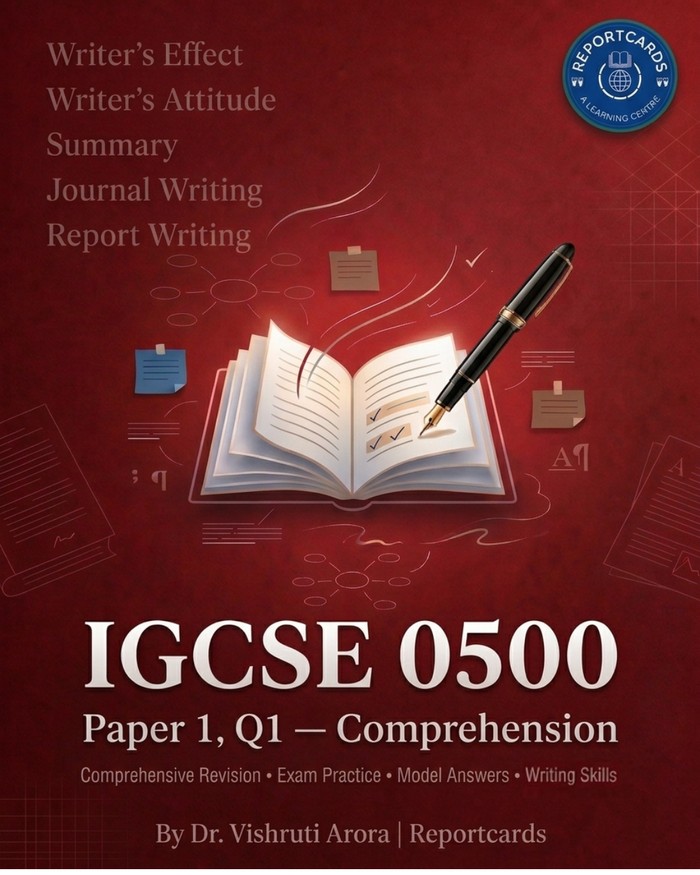
IGCSE 0500 Paper 1, Q1: Comprehension
108 comprehension tasks across all 12 themes, with original passages, hints, guidance boxes and full answer space. Class and homework versions included.
₹999 ₹599
PAPER 1 · Q2
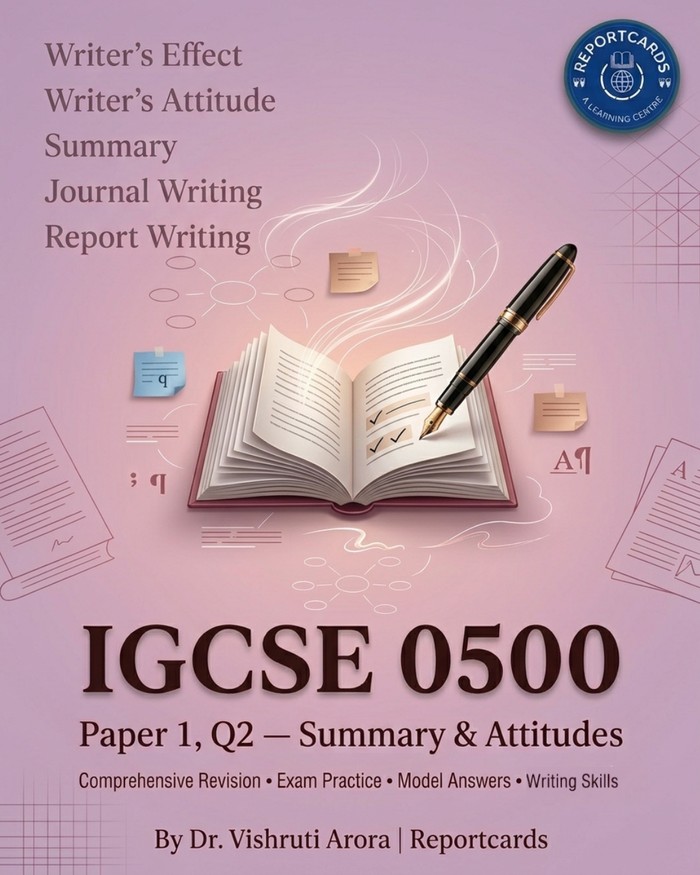
IGCSE 0500 Paper 1, Q2: Summary & Attitudes
48 summary and attitudes tasks across all 12 themes, with Summary Planning Frames, passages, hints and full answer space.
₹999 ₹599
PAPER 1 · Q3
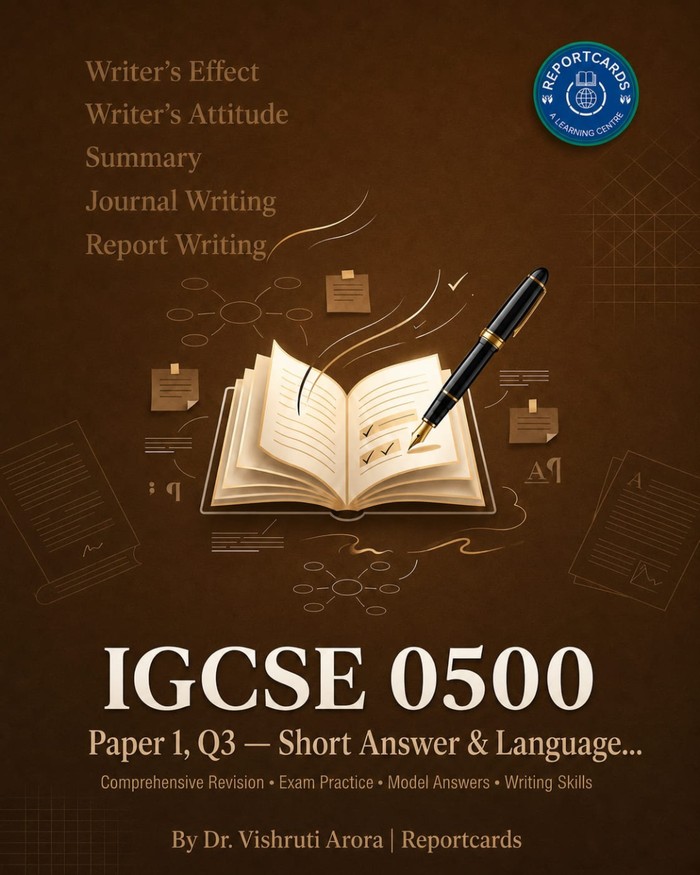
IGCSE 0500 Paper 1, Q3: Short Answer & Language
48 short answer and language tasks across all 12 themes, with Language Task Planning Frames, passages and full answer space.
₹999 ₹599
PAPER 1 · Q4
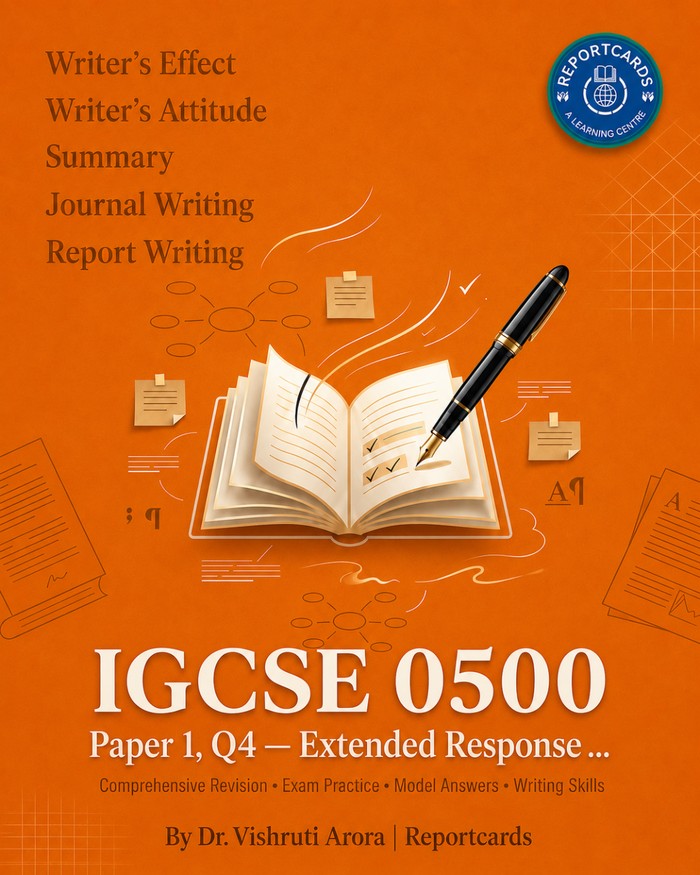
IGCSE 0500 Paper 1, Q4: Extended Response
12 extended response to reading tasks, each self-contained with its own linked source passage, RAPAR checklist and full answer space.
₹999 ₹599
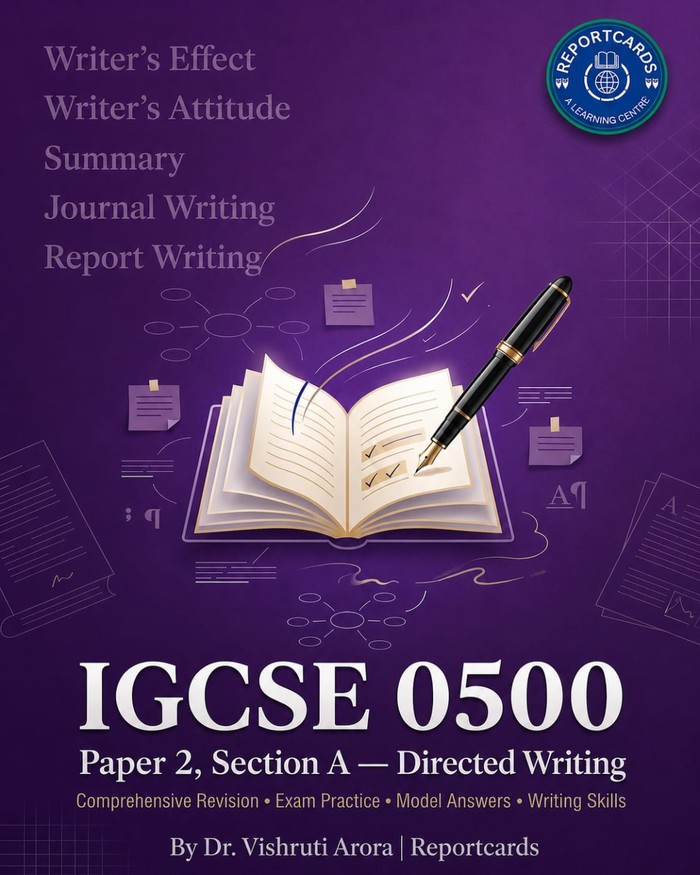
PAPER 2 · A
IGCSE 0500 Paper 2, Section A: Directed Writing
24 directed writing tasks across all 12 themes, with Writing Planning Frames, source inserts, hints and full answer space.
₹999 ₹599
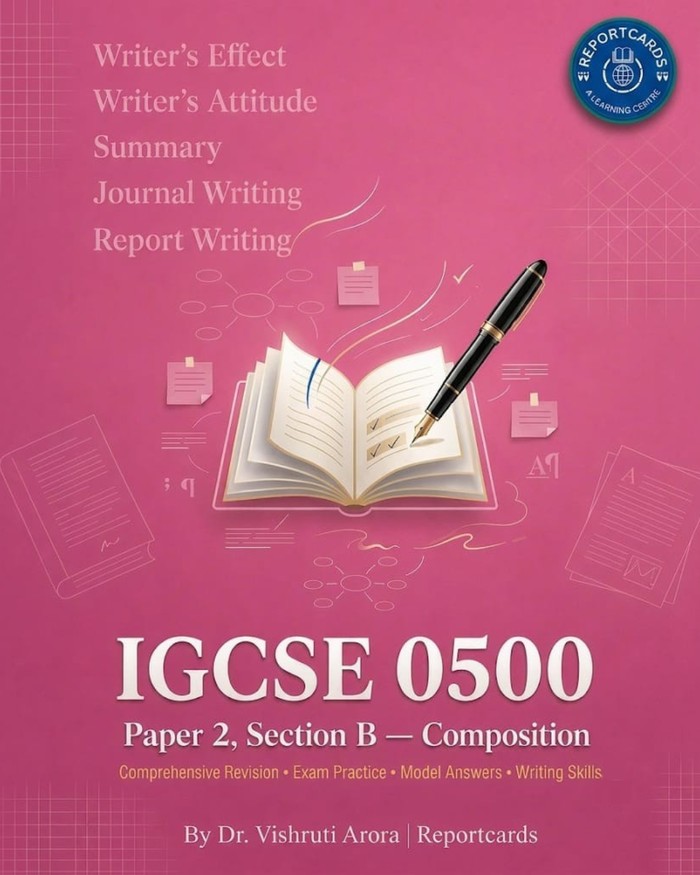
PAPER 2 · B
IGCSE 0500 Paper 2, Section B: Composition
48 descriptive and narrative writing prompts across all 12 themes, each with genre guidance and full answer space.
₹999 ₹599
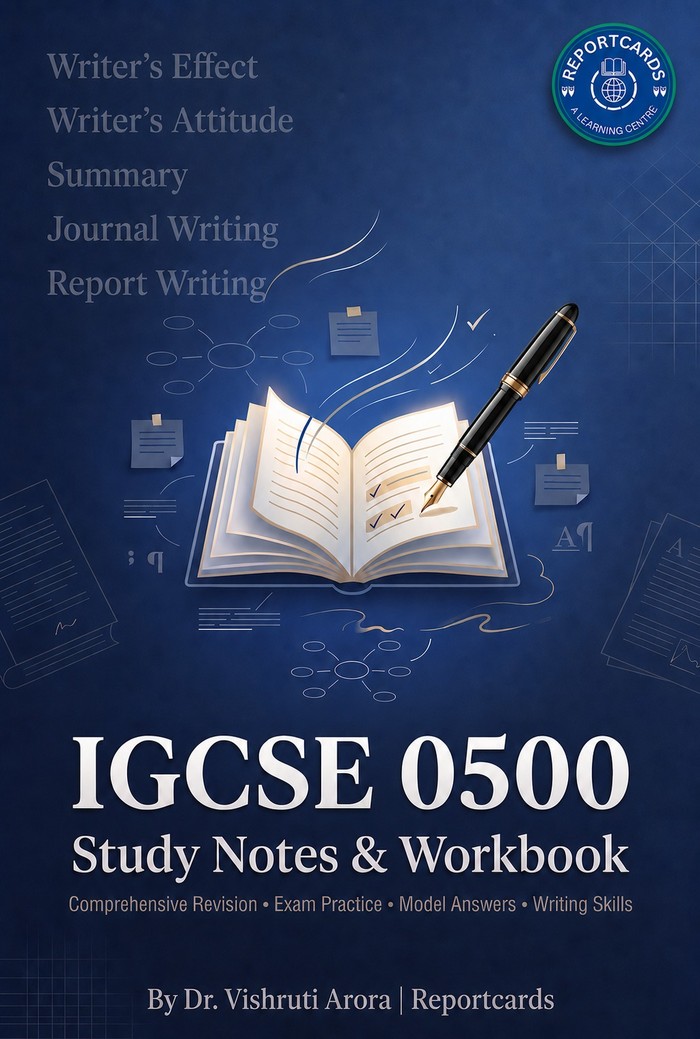
BUNDLE
IGCSE 0500 Study Notes & Workbook
The full 255-page master workbook: all six question types across all 12 themes, progressing from guided practice to exam simulation. Best value: save ₹1,495 versus buying all six volumes separately.
₹3,594 ₹2,099
CBSE
CBSE
NCERT anchored practice and board pattern tests for Classes 1 to 12.
Coming soon
CBSE materials are on their way
Our mentors are preparing worksheets, test series and revision notes for CBSE. Want to be told the moment they launch? Leave us your details.
ICSE
ICSE / ISC
Detail rich materials matched to the depth the CISCE boards expect.
Coming soon
ICSE materials are on their way
Chapter wise practice and solved papers for ICSE and ISC are in the works. Ask us and we will let you know when they are ready.
IB
International Baccalaureate
PYP, MYP and DP materials that are concept first, just like the programme itself.
Coming soon
IB materials are on their way
Concept workbooks and mock paper series for MYP and DP are being written now. Get in touch to hear first.
Inside the workbook
What your child actually practises
The IGCSE 0500 material is built around the twelve themes Cambridge keeps returning to, so a student meets every question type on every kind of passage rather than practising one paper repeatedly.
Paper 1, Question 1: comprehension
108 tasks on original passages, each with hints, guidance boxes and full answer space. The aim is to stop a student answering from a memory of the passage and start them quoting the line that earns the mark. Class and homework versions are both included, so a theme can be taught once and revised later.
Paper 1, Question 2: summary and attitudes
48 tasks with Summary Planning Frames. Most marks here are lost to selection rather than writing: students copy whole sentences instead of lifting the idea. The frames force the selection step first, then the rewrite in the student's own words inside the word limit.
Paper 1, Question 3: short answer and language
48 tasks with Language Task Planning Frames. A language answer needs the effect, not the label, and these tasks keep pulling a student back to what the word does to the reader rather than simply naming the device.
Paper 1, Question 4: extended response
12 full tasks, each self-contained with its own linked source passage and a RAPAR checklist. This is the question where a strong reader still loses marks by drifting away from the source, so every task is answered against the passage it belongs to.
Paper 2, Section A: directed writing
24 tasks with Writing Planning Frames and source inserts. Cambridge asks for a form, an audience and a purpose, and marks fall away when any one of the three slips. The frames make a student commit to all three before the first sentence.
Paper 2, Section B: composition
48 descriptive and narrative prompts with genre guidance. Descriptive and narrative writing are marked differently, and the prompts are grouped so a student can practise the one they are weaker at instead of rewriting the story they already know.
The complete bundle puts all six question types in one 255-page workbook, ordered so a student moves from guided practice, to lightly supported practice, to exam simulation without a parent having to plan the sequence. Buying the six volumes separately costs ₹3,594; the bundle is ₹2,099.
How to use it
A term of practice, without a tutor in the room
Start where the marks are going
Rather than beginning at page one, start with the question type your child's last report or mock flagged. Each volume stands on its own, so a student who is strong at comprehension and weak at summary can spend four weeks entirely on Question 2 without skipping anything they need.
Two guided, then one timed
Work through two tasks with the planning frames and hints open, then attempt a third with the book closed and a timer running. The guided pair teaches the method; the timed one tells you whether it survived contact with exam conditions.
Mark it the way Cambridge does
Every task carries its own answer guidance, so a parent who has never taught the syllabus can still see why an answer earned or missed a mark. For the reasoning behind that marking, our guide to how marking schemes work explains where marks are usually lost.
Honest fit
Who these workbooks suit, and who they do not
They suit a Grade 9 or Grade 10 student sitting Cambridge IGCSE First Language English (0500) who can work for half an hour at a time without being supervised, and a parent who wants to see the practice rather than trust that it happened. They also suit a student moving into an IGCSE school mid-year, because the twelve themes cover the ground a new syllabus assumes has already been met.
They are not a substitute for teaching if your child cannot yet write a clear paragraph in English. In that case the writing needs a teacher first, and our guide for children who struggle with English as the language of instruction is a better place to start. They are also not past papers: these are original passages and prompts written in the Cambridge pattern, which leaves the real past papers free for timed mocks closer to the exam.
Good to know
Why our materials help
Made by our mentors
Every pack is written by the teachers who use it in class, not bought off a shelf.
Aligned to your board
Materials map to the Cambridge IGCSE syllabus, so practice matches the real exam.
Built for self study
Clear solutions, hints and planning frames mean students can learn from mistakes on their own.
Not sure which set fits?
Tell us your child's grade and board, and we will suggest the right materials, often bundled with a programme.
All products are delivered as an instant PDF download after your enquiry is confirmed. There is no waiting for shipping.
Which boards are the learning products available for?
Cambridge IGCSE First Language English (0500) materials are available now. CBSE, ICSE and IB materials are coming soon; leave your details on the contact page to be notified when they launch.
Who writes the practice materials?
Every pack is written by the mentors who use it in class at Reportcards, not bought off a shelf, so it maps directly to what is actually taught.
Is the IGCSE 0500 bundle cheaper than buying papers separately?
Yes. The full Study Notes & Workbook bundle covers all six question types across all 12 themes for ₹2,099, saving ₹1,495 versus buying all six individual volumes separately.
Which grades are the IGCSE 0500 materials written for?
They are written for Grade 9 and Grade 10 students preparing for Cambridge IGCSE First Language English (0500), and they work equally well for a student starting early in Grade 9 or revising in the months before the exam.
Are these past papers?
No. Every passage and prompt is original, written in the Cambridge pattern by the mentors who teach the syllabus. That is deliberate: it leaves the real past papers free for timed mocks closer to the exam.
Can we buy just one question type instead of the whole bundle?
Yes. Each of the six question-type volumes is sold on its own at ₹599, so you can start with the paper your child is losing marks on and add the others later.
Do the workbooks include answers and explanations?
Yes. Every task carries answer guidance and planning frames, which is what makes them usable for self study at home without a tutor sitting alongside.
 RC