Tuition and enrichment programmes for KG to Class 12
From a child's very first letters to the final board paper, every programme is taught in small batches, online or at our Adarsh Nagar centre, and built around the learner, not just the syllabus.
KG and foundation
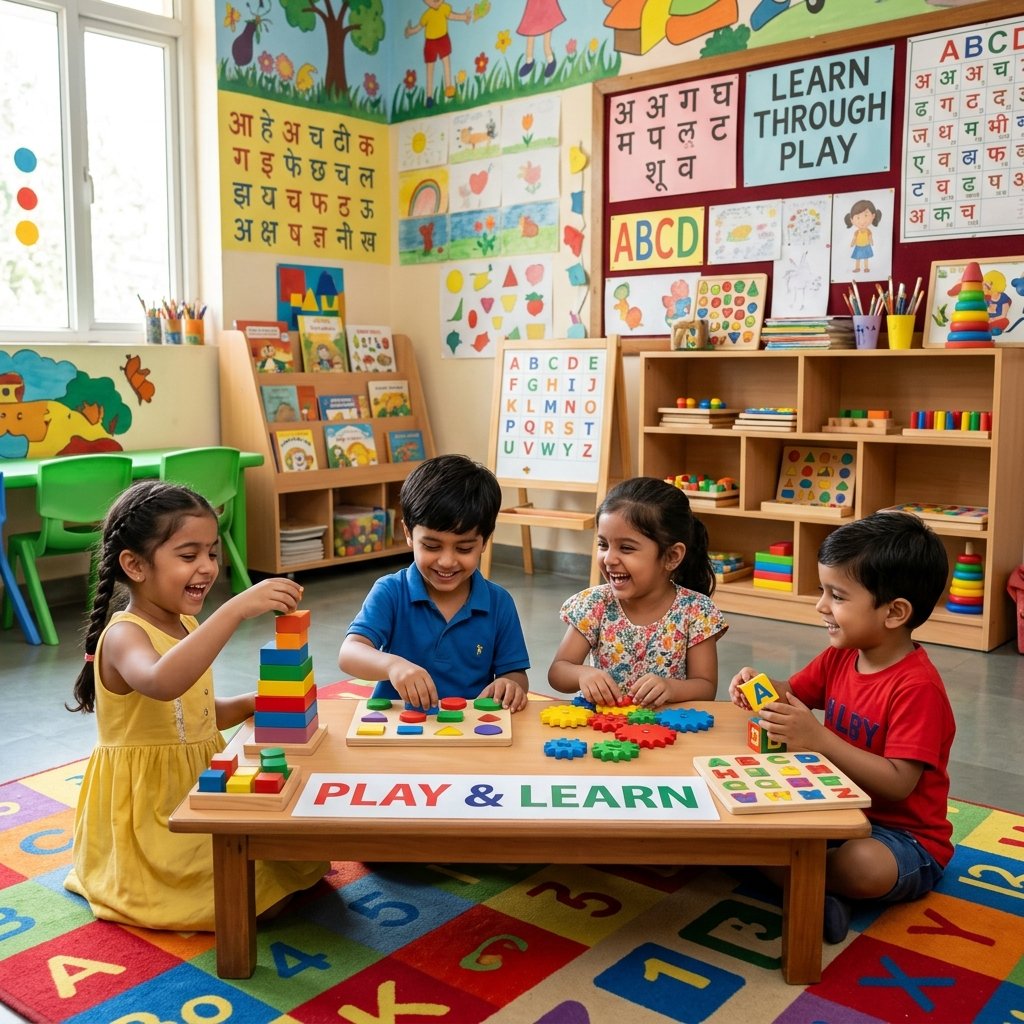
Early Years Programme
The first years shape how a child feels about learning for life. We keep it playful, warm and unhurried, so curiosity grows naturally.
Sessions run in small groups of around six children with one mentor, at our Adarsh Nagar centre or live online, Monday to Saturday between 3pm and 10pm. Most families join between ages four and seven, and move naturally into our Academics programme once formal schooling begins. Not sure if your child is ready yet? Our kindergarten readiness checklist covers what actually matters.
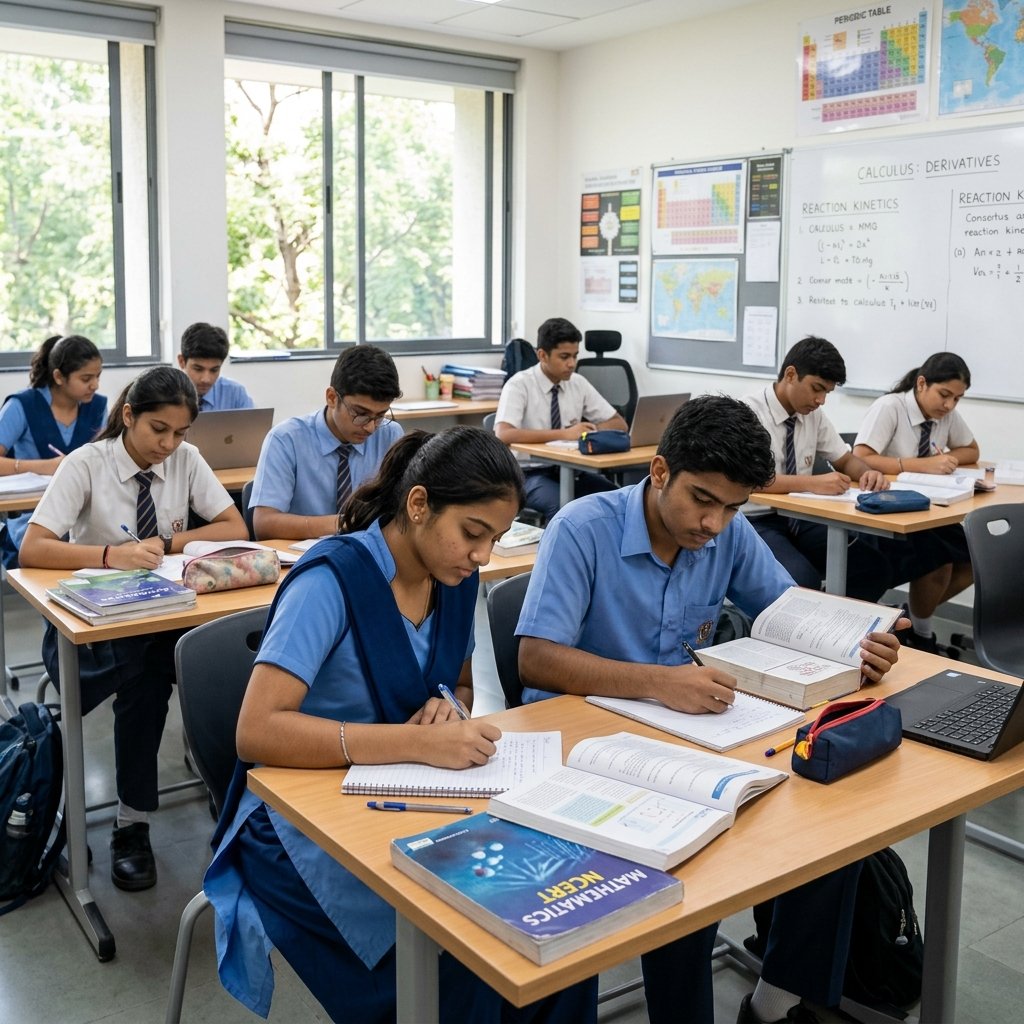
Our core programme. Subject by subject coaching across all major boards, taught for real understanding and steady, visible progress. If you are still comparing options, read our guide on how to choose the right tuition centre in Jaipur before selecting a programme.
Batches stay small, roughly one mentor for every six students, so every child is actually taught rather than just present. We cover Grade 1 to 12 across CBSE, IGCSE, ICSE and IB, with dedicated board-pattern practice building up through Grade 9 and 10, and focused revision through Grade 11 and 12. Moving from ICSE into ISC, or from the IB MYP into the Diploma? Read our guides to ICSE to ISC and IB MYP vs Diploma.
CBSE, IGCSE, ICSE and IB curricula
Sciences, Maths, English, Humanities, languages and more
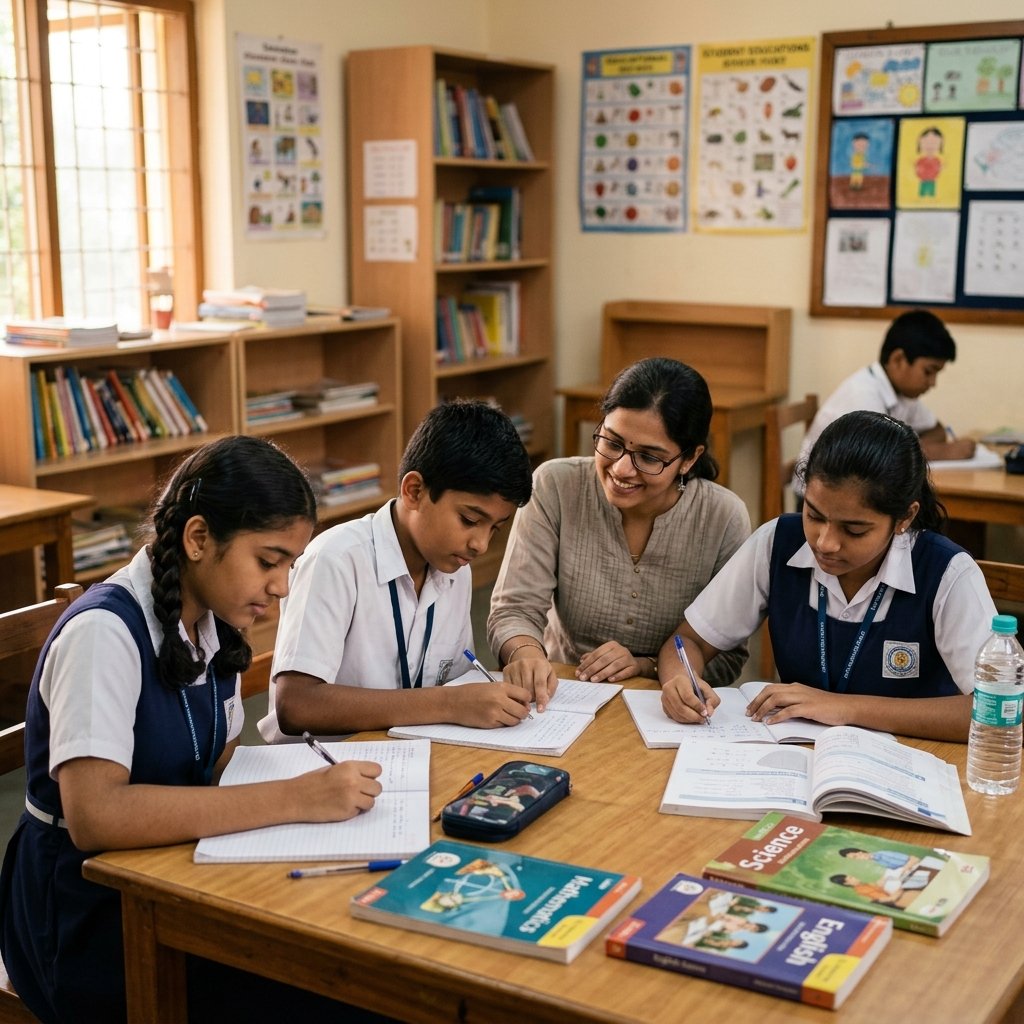
For families who want everyday momentum. A calm, guided space to finish homework, revise and turn weak spots into strengths.
This is the programme most families start with: a standing evening slot, several times a week, where homework gets finished properly and the next day's topics get previewed rather than rushed through alone at home. Wondering how much you should still be helping at home? Read our guide to homework help by age.
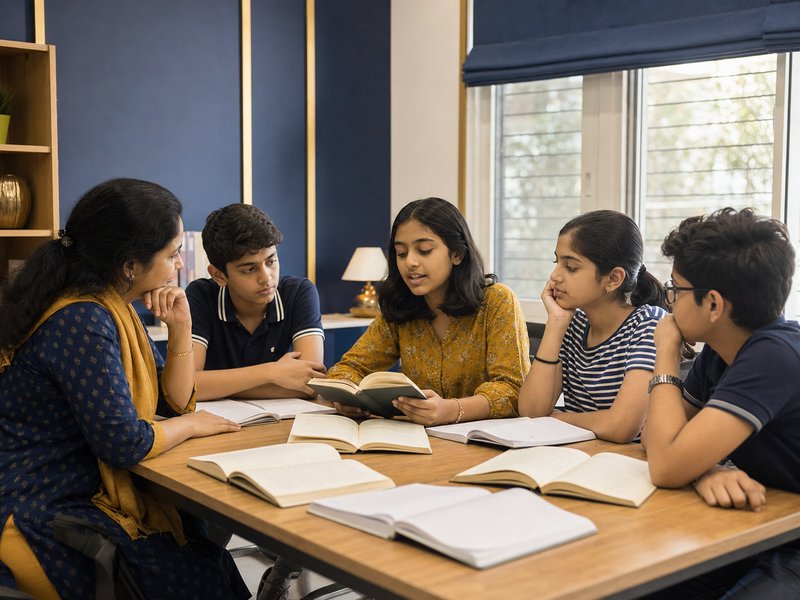
Built around Cambridge IGCSE English Language and Literature, this track goes deep on the two papers and set texts, and builds the everyday UK English skills, grammar, vocabulary, spoken fluency and accent familiarisation, that carry a student well beyond the exam itself.
Sessions work through timed Paper 1 and Paper 2 practice, close reading of the prescribed novel, drama and poetry texts, and structured feedback on written responses, building toward the May/June, October/November and February/March exam series, alongside spoken fluency and listening practice in British English. If English itself, not the subject, seems to be holding your child back, our guide to closing an English gap is worth reading.
Paper 1 and Paper 2 exam technique
Set-text analysis: novel, drama and poetry
UK English grammar, spoken fluency and accent building
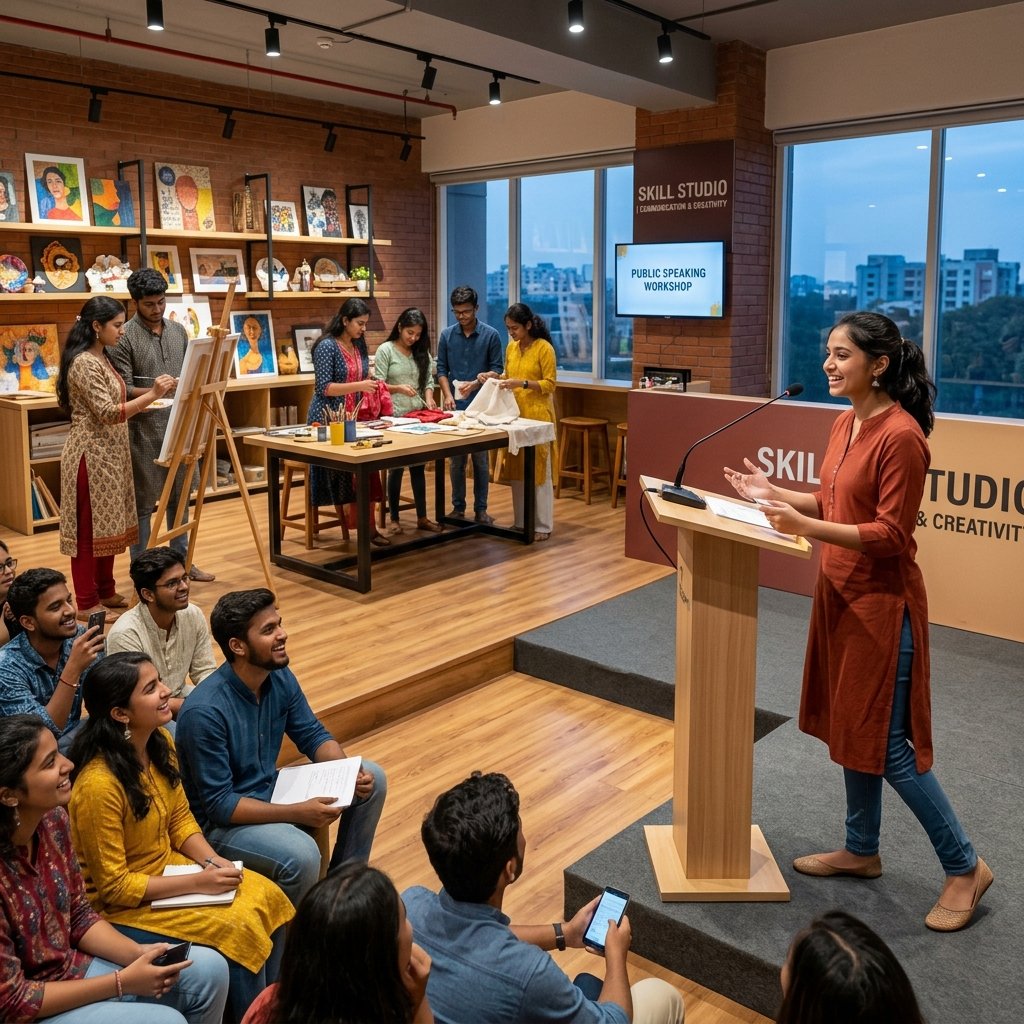
Marks open doors, but skills carry a child through them. Our enrichment track builds expression, creativity and confidence.
Sessions are mentor-led rather than syllabus-led, so pace follows the child, not a fixed curriculum. Most students treat it as a weekly add-on alongside Academics or After-School, rather than a standalone programme. Worried this takes time away from board exam preparation? Our guide to co-curriculars and board exams looks at what actually helps.
The centre is at 704, Frontier Colony, Adarsh Nagar, Jaipur, and classes run there Monday to Saturday between 3pm and 10pm. Most families who come to us in person live a short drive away and choose a slot that sits after school hours, so a student is not travelling in the middle of the teaching day.
Every programme also runs online, on the same timetable and with the same mentors. That matters for two kinds of family: those elsewhere in Jaipur for whom the evening traffic makes a 45-minute commute a 90-minute one, and those outside the city, including families abroad who want Indian board or Cambridge coaching in Indian time. Online students get the same small batch, the same worksheets and the same marked work; only the room changes. If you are weighing the two, our guide to online and offline tuition sets out where each genuinely works better.
The rhythm
What a week actually looks like
Small batches, roughly one to six
A batch is capped so that every student is asked something in every session. That is the whole reason for the cap: in a class of thirty, a quiet child can go a full term without being asked to explain their reasoning out loud, which is exactly when a gap hides.
Teach, then practise in the room
A session is not a lecture followed by homework. New material is taught, then practised while the mentor is still standing there, so a wrong method is caught in the first ten minutes rather than repeated across twenty questions at home.
Homework that is actually marked
Work set between sessions comes back marked with a comment, not a tick. Parents see the marked work, so "he says he has finished" becomes something you can check without an argument at the dining table.
Doubt time before exams
In the weeks before school exams and boards, batches shift towards past papers and doubt clearing, because that is when a student stops needing new material and starts needing to be told why the marks went.
Class 9 to 12
The board years, planned backwards from the exam
Class 10 and Class 12 are different from every year before them, not because the content is harder but because the calendar is fixed. We plan a board-year student backwards from their exam series: syllabus first, then past papers, then timed full papers with marking that matches the real scheme. Our term-by-term Class 10 timeline shows the same plan in detail, and our explanation of marking schemes covers where marks are usually lost. Older students can also try our free SAT practice test, an original full-length practice resource with 98 questions.
For Cambridge students, English is the subject where preparation is most often mistaken for reading practice. Our IGCSE First Language English (0500) coaching works question type by question type, the same structure as our self-study workbooks, so a student can carry the method home between sessions. Students choosing subjects after Class 10 can start with our guide to science, commerce and arts, and families comparing boards altogether should read CBSE vs IGCSE vs ICSE vs IB before deciding.
Boards we coach
Choosing the right board
All four boards lead to strong outcomes. The right one depends on how your child learns and where they are headed next.
IB
The PYP, MYP and DP stages build inquiry and independent thinking from an early age, and prepare students well for university applications abroad.
IGCSE
Cambridge's international board, popular with families who value skills-based assessment, coursework and strong written and analytical English. Often chosen before moving into IB or A Levels at senior school.
CBSE
India's most widely followed board, with a structured, NCERT-based syllabus and a clear board exam pattern in Class 10 and 12. Suits families who want a familiar, exam-focused rhythm with strong national recognition.
ICSE
Known for a detailed, well-rounded syllabus with equal weight given to languages, sciences and the arts. A good fit for students who enjoy depth across a wide subject spread rather than a narrow one.
Not sure which is right for your child? Book a free demo and we will talk it through based on their current school, learning style and future plans.
Subjects we coach
One centre, every subject
From core sciences to languages and the arts, our mentors coach across the full spread most CBSE, IGCSE, ICSE and IB syllabi expect a Grade 9 to 12 student to cover.
A few things parents often ask before enrolling in a course.
What are your class timings?
We run Monday to Saturday, 3pm to 10pm, both online and at our Adarsh Nagar centre. Sunday is a rest day for students and mentors alike. Exact slots are confirmed when you enrol, based on your child's grade and availability.
Can my child switch boards or programmes later?
Yes. Many students move from Early Years into Academics, or add Skill Studio alongside their main programme. If your child changes school boards mid-year, we adjust their coaching plan rather than starting over.
How do you decide which batch my child joins?
After the free demo, we place your child in a batch matched to their grade, board and current level, keeping the group small, around six students, so pace stays right for them.
Do you offer a trial before enrolling?
Always. Every programme starts with a free, no-obligation demo class so you and your child can experience our teaching before deciding.
Do you coach IGCSE and IB as well as CBSE and ICSE?
Yes. We coach CBSE, ICSE/ISC, Cambridge IGCSE and IB from KG to Class 12, and mentors are matched to the board a student actually sits, because the same topic is examined differently in each.
How many students are in a batch?
Batches are small, around one mentor to six students, so every child is asked something in every session rather than sitting quietly through it.
Where is the centre, and do you teach online?
The centre is at 704, Frontier Colony, Adarsh Nagar, Jaipur, open Monday to Saturday from 3pm to 10pm. Every programme also runs online on the same timetable with the same mentors.
Do you help with school homework as well as exam preparation?
Yes. The After-School Programme is built around school work and daily homework, while the Academics programme focuses on the syllabus and exams. Many students combine the two.
Find the right programme for your child
Book a free demo and we will recommend a path based on your child's grade, board and goals.
 RC